Anti-Mercenary Tokenomics: Vagrants To Users
Dec 30, 2025
The Problem: Renting Loyalty
In the Web3 ecosystem, there is a fundamental misunderstanding that often leads to a project's demise: the belief that token holders and users are the same thing. They are not. Token holders care about price appreciation, TVL, and staking yield, whereas users care about the product.
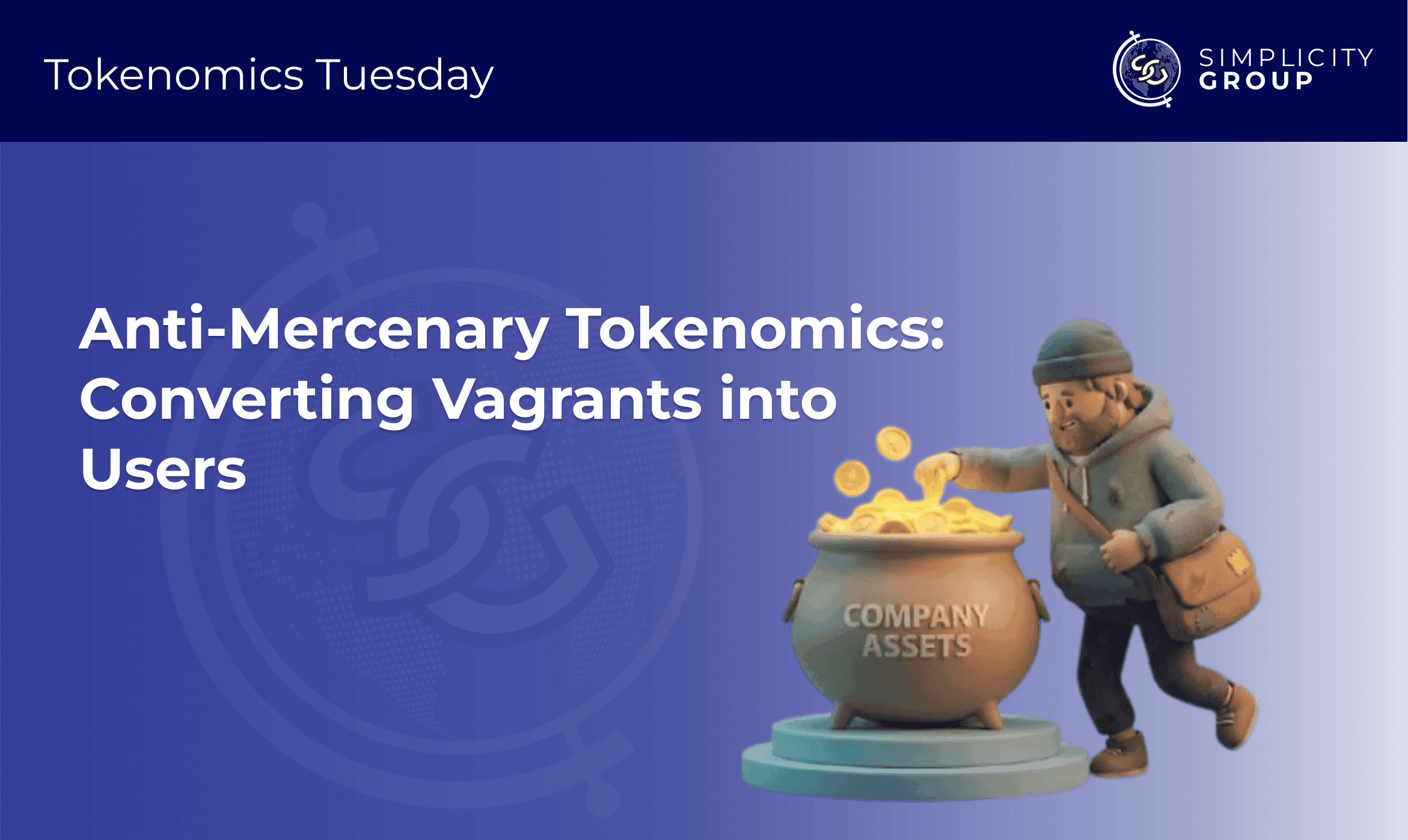
When projects focus on incentivizing token holders through high staking yields or aggressive emissions, they attract "vagrants" or speculators who shift their capital to wherever gives the greatest APY. These actors provide "rented" liquidity; as soon as the rewards dry up or a competitor offers a higher yield, they exit, causing a supply shock that can kill the project.
To build a sustainable protocol, we must shift from renting liquidity from mercenaries to building loyalty with actual users. This requires Anti-Mercenary Tokenomics: designing systems that filter out passive rent-seekers and disproportionately reward those who add value to the ecosystem.
Here is how to design an economy that converts vagrants into users.
1. Stop Paying the "Free Rider" Tax
The most common mistake in tokenomics is the "Free Rider Problem," often exacerbated by mechanisms like token burning. When a project uses revenue to buy back and burn tokens, or distributes fees to all stakers regardless of activity, it effectively taxes the active users to pay passive holders.
If you are generating revenue from transaction fees, do not distribute it to passive stakers. Instead, redistribute rewards to those who actively participate.
The Fix: Implement "Proof of Participation" or "Skin in the Game" models. Rewards should only flow to stakers who also perform a service, such as voting in governance, providing liquidity, or running a node. If a staker is passive, their yield should be nominal or zero. This ensures you aren't taxing your power users to pay your exit liquidity.
2. Implement KPI-Based Unlocks
Traditional vesting schedules are time-based, releasing tokens regardless of the project's health. This allows early investors and mercenaries to dump tokens even if the product has zero traction. A superior alternative is KPI Vesting.
How it works: Token unlocks are tied to key performance indicators (KPIs) such as real user numbers, revenue, or protocol usage.
The Anti-Mercenary Effect: This aligns the incentives of investors (who usually want to sell) with the long-term success of the protocol. If the "vagrants" want their liquidity, they must help the protocol grow to hit those KPIs. This creates a scenario where unlocks are matched by market absorption capacity, stabilizing the price.
3. Reflexive and Dynamic Incentives
Static emission schedules (e.g., "we emit 100 tokens per day forever") are a playground for mercenaries. Instead, projects should look toward Reflexive and Dynamic Ecosystem Incentives. These are algorithms that adjust incentives in real-time based on ecosystem health and user behavior.
Case Study: DIMO DIMO employs a dual-issuance model that transitions users from passive connection to active utility:
Baseline Issuance: Rewards users simply for connecting their cars and streaming data. This bootstraps the network.
Marketplace Issuance: Rewards users when their data is actually consumed by developers or partners.
As the platform matures, DIMO is designed so that baseline rewards (passive) taper off, shifting the focus to marketplace rewards (active value creation). This ensures that over time, the economy favors those creating real utility rather than just passive data streamers.
Case Study: Helium Helium implemented dynamic rewards where distribution is calculated based on "Data Credits burned". Since Data Credits are consumed only when data is transmitted, rewards flow to where the network is actually being used, rather than just where hardware exists.
4. The Loyalty Multiplier: Conviction Voting
Mercenaries are short-term thinkers. To counter this, tokenomics should disproportionately reward time. In governance, this is often handled through Conviction Voting, where a user’s voting power grows the longer their tokens remain staked on a specific proposal.
We can apply this logic to financial rewards:
Time-Weighted Yield: Instead of a flat APY, implement a multiplier that increases the longer a user remains active. This disincentivizes "rage quitting" or short-term farming.
Usage-Weighted Rewards: Similar to DIMO’s "streak bonuses," users who maintain consistent activity (e.g., weekly logins, consistent data streaming) earn a higher share of the issuance.
5. Transitioning from Acquisition to Retention
There is a specific window where incentivizing token holders is useful: the beginning. Token holders are cheaper and faster to acquire than users, and they provide the initial "marketing boost" and capital needed to start.
However, projects must recognize the "Opportunity Cost". Every dollar spent rewarding a high-APY staker is a dollar not spent on improving the product or acquiring a real user. The goal is to use the initial hype to build a treasury and then pivot aggressively toward user acquisition before the mercenaries leave.
The Bottom Line
If your tokenomics rewards people for doing nothing, you will attract people who do nothing. By shifting from static, time-based rewards to dynamic, usage-based incentives, you filter out the vagrants and build a community of users who are aligned with the long-term success of the protocol.